Reality Check »
Diamonds are forever. Apparently so is the argument
Identical under the loupe, worlds apart on the receipt — the ring debate most of us are quietly having
By Malik T
A friend of mine got engaged last spring and spent the first 10 minutes of the story not on the proposal but on the stone. Lab-grown, two and a half carats, and she wanted me to know it before I could ask. That defensiveness has mostly faded from the culture by now. What used to be a slightly awkward disclosure is turning into the default choice, and the jewellery counter has quietly become one of the more interesting arguments in modern consumerism.
Let’s start with what the two stones actually are, because this is where most conversations go wrong. A lab-grown diamond isn’t a fake, a simulant, or cubic zirconia’s fancier cousin. It’s crystallized carbon, same as the one dug out of a mine in Botswana, arranged in the exact same lattice. Ten on the Mohs hardness scale either way. A jeweller with a loupe can’t tell them apart, and neither can a standard diamond tester, since both conduct heat identically. You need a lab with equipment that reads growth patterns to sort one from the other. So no, this isn’t a quality argument. It never really was.
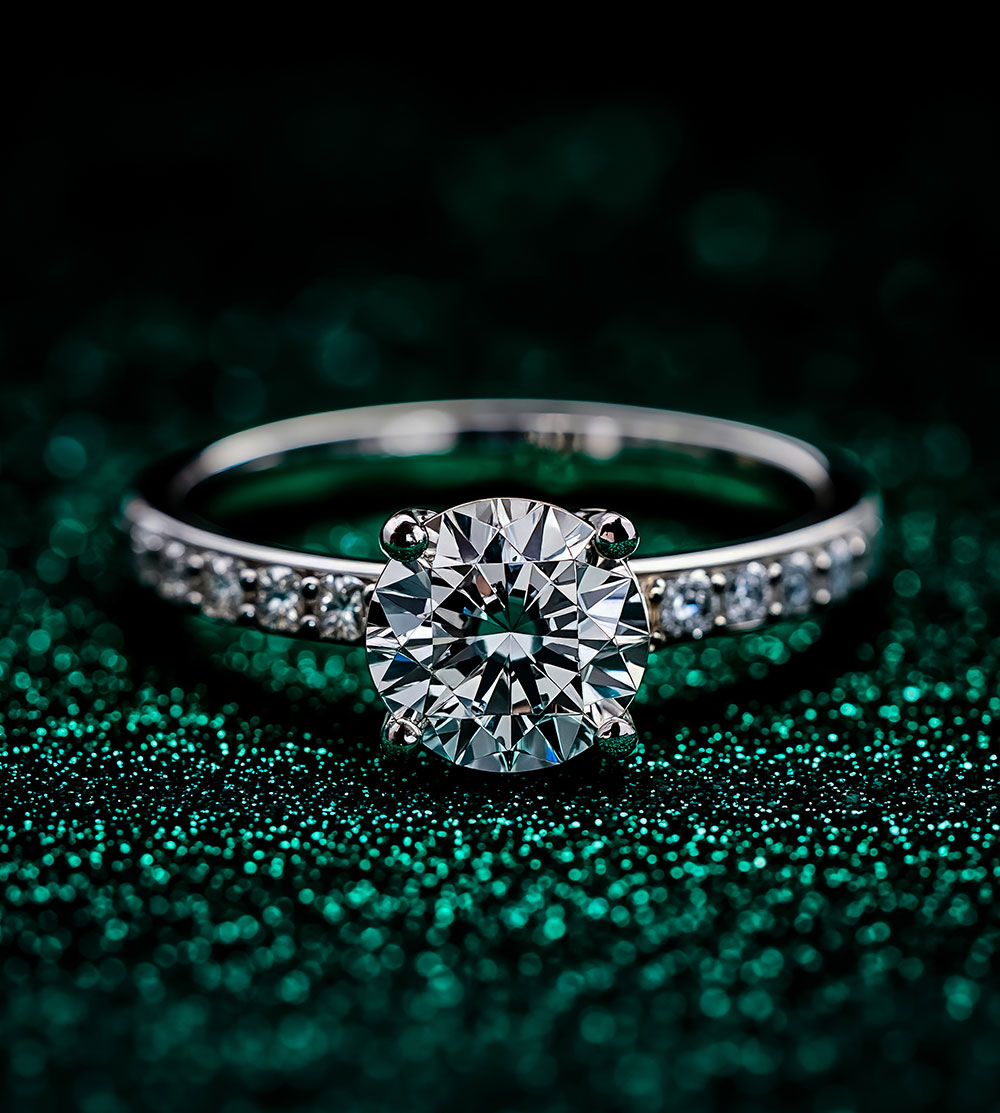
It’s a price argument, and the price has moved a long way in a short time. A natural one-carat stone, near colourless, sits around $4,000 to $6,500 at retail this year. Grow the same specification in a reactor and you’re paying somewhere between $700 and $1,500. Back in 2018, that gap was maybe 30 or 40 percent. Now it’s routinely 75 to 90 percent, and the reason has nothing to do with romance — it’s manufacturing. Producing a gem-quality lab carat cost several hundred dollars in 2022. Today it’s under a hundred. Prices like that don’t stay a niche curiosity for long, and they haven’t: lab-grown stones now make up more than half of all engagement ring center diamonds sold in the U.S., according to The Knot’s most recent wedding survey, up from just 12 percent in 2019.
Here’s the part that doesn’t show up on the price tag, though. Paul Zimnisky, an independent diamond analyst, has been watching this shift longer than almost anyone. His read on natural diamonds is that people don’t buy them for practical reasons at all. “It’s an emotional purchase, a financial sacrifice,” he’s said — and that sacrifice comes with something a lab stone mostly doesn’t: a resale market. Natural diamonds hold somewhere between 20 and 60 percent of their value if you ever sell. Lab-grown holds far less, often close to nothing, partly because tomorrow’s wholesale price keeps making today’s purchase look overpriced. Zimnisky doesn’t sugarcoat it — his advice to lab-grown buyers is blunt: don’t expect to get your money back.
So which one should actually end up on your hand? Honestly, it depends what you’re looking for. If bigger and shinier for less money is the goal, lab-grown wins without much of a contest — that’s exactly why so many couples are choosing two carats over half a carat on the same budget, and why the environmental footprint argument keeps pulling more buyers in. If what you want is something with weight behind it, a stone that’s been sitting underground since before humans existed and that might still mean something on a balance sheet in 30 years, natural still has the edge, as long as you’re clear-eyed that you’re paying for scarcity and story more than sparkle.
Neither choice is the wrong one. Just know which story you’re buying before you say yes to it.