Hello People »
Homebound!
From Art Deco’s late-night drama to Scandinavian sun-drenched calm, four legendary design styles are calling. Here is how to steal their best ideas without losing your soul — or your mind
By Lineysha Jain
Walk into a house that’s actually been lived in, and you can feel it immediately. It’s the ease of the room when you kick off your shoes, make a cup of coffee and settle down for the evening.
If you’ve paid any attention to interior design in the last few years, you’ve probably witnessed a whirlwind of pendulum-swinging trends. First we were told to clear out all traces of knick-knack and live with only three beige cushions. Then suddenly the internet decided we all needed to slather in high gloss shade walls and moody velvet lounges across our walls.
It can be tiring trying to keep up. Throw out the trends that flash and fizzle every six months and you’re left with four enduring styles that keep appearing, not for trend, but for function: Art Deco, Mid-Century Modern, Scandinavian and Maximalism.
You don’t need a qualification from an interior design school to achieve these styles in your home or apartment. You just need a sense of what made the styles special in their time; select the pieces and elements you like and leave out the ones you don’t.
Art Deco: Bold profiles, rich materials, a little drama
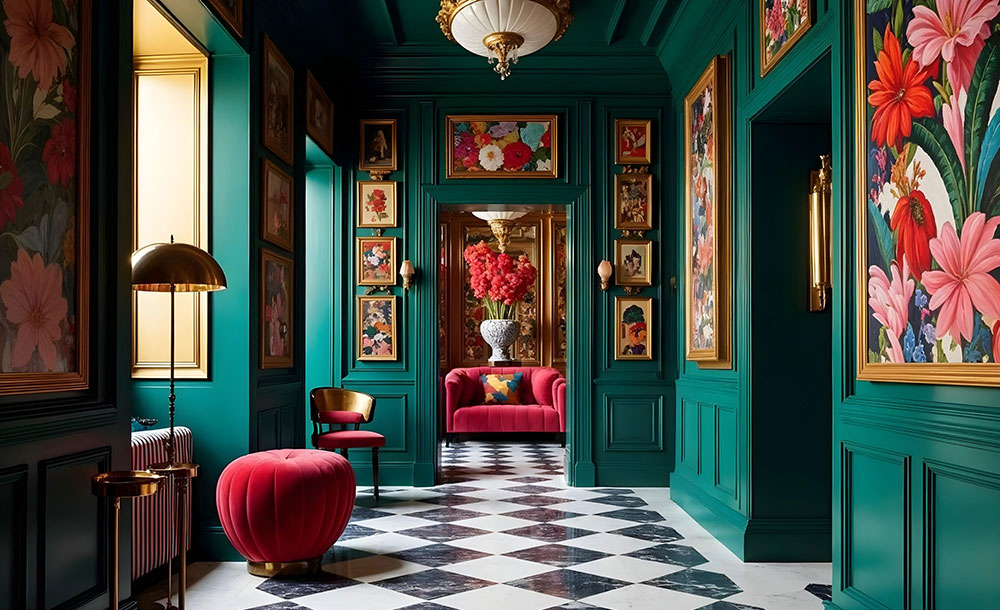
Art Deco was all about being unsubtle. The 1920s era style was about celebrating the machine age, optimism and plain unadulterated luxury. Look for strong geometric shapes, deep arches, sunburst patterns, dark woods like ebony or burl. It’s all about contrast, mixing light marble wall surfaces with dark walls or bright polished brass against deep, plush velvet.
“Art Deco was a true reflection of a success-ful time commercially… Every shape and line literally stands up and out begging for attention and appreciation.”
— Reeve & Co. Design Archives
How to use it without becoming a movie set
If you go all in on Art Deco, your place can very quickly become a vintage lounge or movie set. The key to using the style is in restraint: Only buy the big pieces: Rather than filling the room with geometric furnishings, buy one piece with a great profile. An arched display cabinet, a channel-tufted sofa or a fluted credenza will do most of the work.
Buy the hard stuff: Swapping out standard cabinet hardware for heavy stepped-brass options or a faceted glass light fixture adds in a hint of Deco without making the room feel heavy.
Mid-Century Modern: Simple profile, warm wood materials
This style, which ran from roughly the end of the Second World War to the 1960s, is all about furniture being functional yet comfortable, proving that mass production is possible without compromising design.
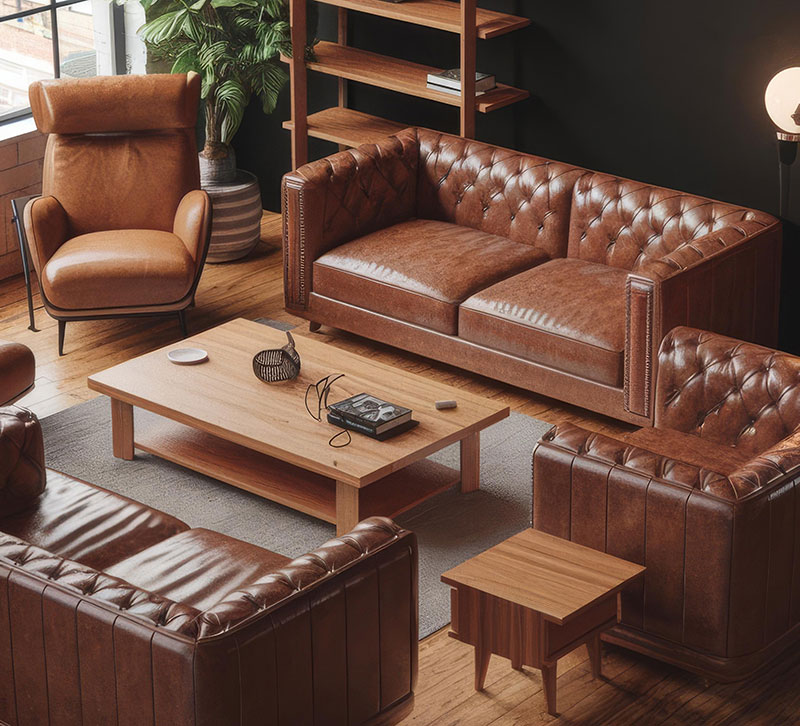
The style uses low-slung furniture and tapers legs and highlights the natural grain of the wood, usually teak, walnut and rosewood with industrial accents like molded plastic, curved glass or thin steel frames.
“Recognizing the need is the primary condition for design.”
— Charles Eames, Co-creator of the iconic Eames Lounge Chair
How to use it without making your place look like a showroom
Because the Mid-Century style is so popular, buying everything from a single modern furniture retailer can be a fast way to make your place look like a generic catalog.
Leave the sights low: Mid-century furniture pieces are mostly low- slung. Using a low teak sideboard beneath the TV or a low-profile sofa before a window creates visual interest across the room, making smaller spaces feel far larger.
Add warmth: Smooth lines can be cool if you’re not careful. Balance out smooth walnut surfaces with textured wool blankets, worn cognac-leather pieces or a simple woven rug, to keep everything feeling lived-in.
Scandinavian: Soft illumination, natural materials
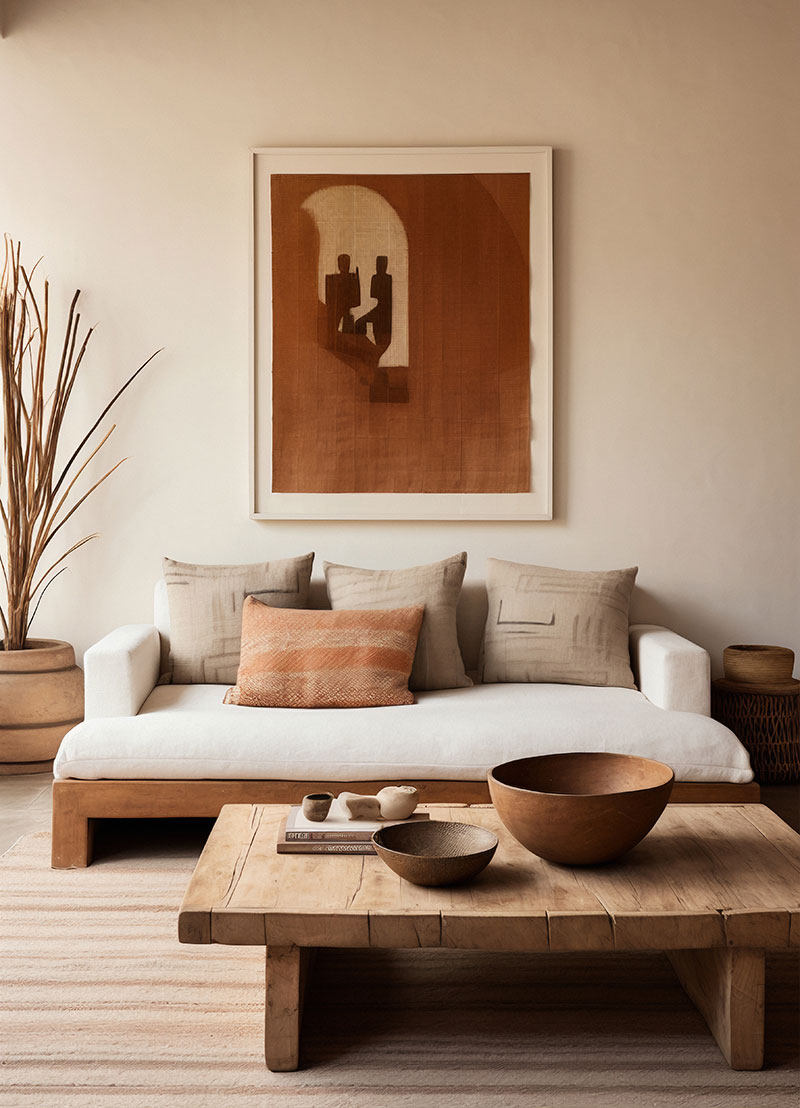
Scandinavian design is practicality born out of necessity in the Nordic countries where the winters are long and dark. The style is based around the principles of Hygge (creating a feeling of coziness) and Lagom (having just enough of everything). Expect light woods like ash or birch, pale-painted walls, textured knitwear and no unnecessary visual clutter.
“Hygge is about an atmosphere and an experience… It is about feeling safe, sheltered from the world, and allowing yourself to let your guard down.”
— Meik Wiking, Author of The Little Book of Hygge
How to use it without making your place feel cold
Scandinavian style is often mistaken for a cold, sterile minimalism but an actual Nordic home is surprisingly cozy:
Replace patterns with textures: Keep your walls neutral but add a flat-weave wool rug, sheer linen curtains that let in natural light and a plush shearling throw over the chair to add instant warmth.
Swap out overhead lighting: The Scandinavian style is all about ambient lighting. Rather than flicking a switch on a harsh overhead light, use table and floor lamps and candles to create different levels of lighting across the room.
Maximalism: Personal history, colourful accents, no rules
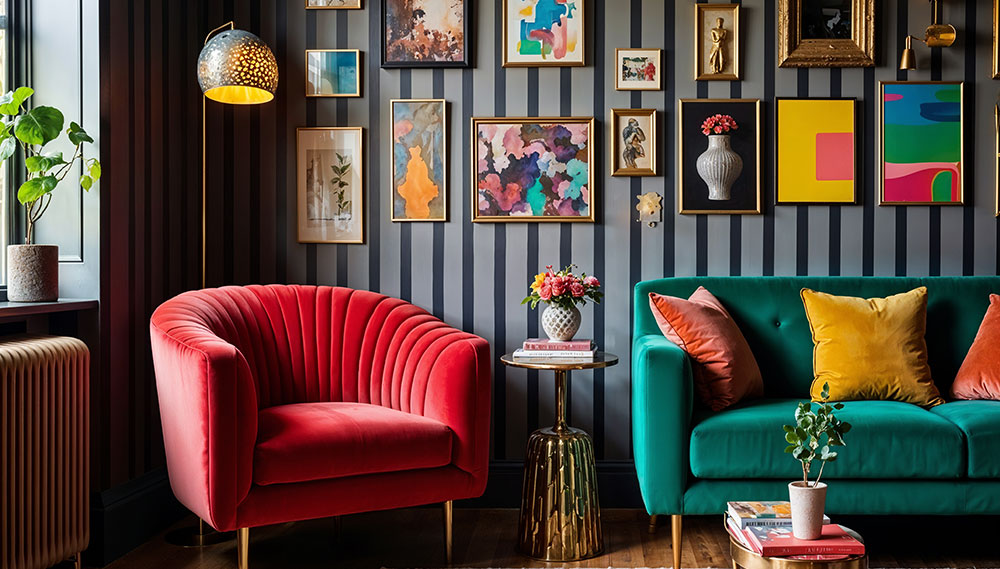
Maximalism suffers from the reputation of being messy. It’s all about a lived-in atmosphere where the space reflects your personal history of living. Saturated paint colours, mixed patterns, gallery walls full of art, vintage pieces mixed in with modern furniture; it’s a colourful, personal way to furnish your space.
“More is more and less is a bore.”
— Iris Apfel, Fashion and Interior Icon
How to use it without losing your marbles
To create a layered room without going nuts, all you need is a few organizing rules:
Pick a main colour: Pick one recurring colour such as a muted forest green or warm terracotta and make sure it appears across your wallpaper, rugs and throw cushions to tie the room together.
Use mixed pattern sizes: If you have a large floral pattern in your curtains, don’t pair it with another large pattern on your sofa; mix it up with a thin stripe so your eyes have somewhere to rest.
| Style | Go-To Colors | Core Materials | Overall Vibe |
|---|---|---|---|
| Art Deco | Deep Emerald, Navy, Black, Gold | Brass, Velvet, Marble, Fluted Glass | Moody, Architectural & Dramatic |
| Mid-Century Modern | Teak, Ochre, Mustard, Rust | Walnut, Leather, Steel, Molded Plywood | Clean, Grounded & Practical |
| Scandinavian | Chalk White, Oat, Soft Gray | Birch, Light Oak, Linen, Raw Wool | Airy, Calm & Warm |
| Maximalism | Jewel Tones, Saturated Earths | Mixed Prints, Lacquer, Vintage Art | Personal, Layered & Lively |
The best rooms don’t use a single style
If there’s one rule of thumb designers use that rarely gets discussed, it’s that no one uses just one style. Those rooms that feel the most authentic and are the most inviting are almost always a subtle mix of different eras. A pale Scandinavian oak dining table paired with a set of mid-century leather chairs or an Art Deco mirror hanging above a simple modern entryway bench.
Design eras are your starting point, but your own personality is where the real soul comes in; pick out the pieces you love, ditch those that feel stuffy, create a space that works for the way you want to live.