Reality Check »
How We Are Speaking Our Way To The Next Vacation
The keyword era is fading as multilingual voice searches redefine how a billion people plan trips
By Rupam Jain
Forget the clunky, three-word search bar. Indians are changing how they plan holidays, and it’s not quiet or subtle — it’s a big, vocal shift.
Right now, MakeMyTrip’s AI assistant, Myra, handles over 50,000 conversations every day. And the data is pretty clear: when people stop typing and start talking, they finally get to say what they actually want.
Text searches still live in the “keyword” era. You get these short, awkward bursts like “budget-friendly Goa hotels”. But voice? But voice lets people open up. It’s more natural, more human. Suddenly, planning a trip feels less like talking to a robot and more like, well, talking.
The keyword era is fading out
Let’s be honest, typing and speaking are worlds apart. Most folks keep their text searches to a cramped three or four words. We’ve learned to talk to computers in this clipped, unnatural way.
But the moment you switch to voice, all that vanishes. About 23% of voice queries go longer than 11 words — compare that to just 7% for text. Instead of typing “North Goa beach,” people say things like, “Show me affordable hotels in North Goa near the beach with a pool,” or, “Two adults and one kid, three nights from 15th May, budget under ₹25,000 per night.”
You’re not just searching — you’re telling the whole story. Dates, budget, group size, what you want in a hotel — it’s all there in one breath.
Where voice really shines
There are a few places where voice is just winning hands down:
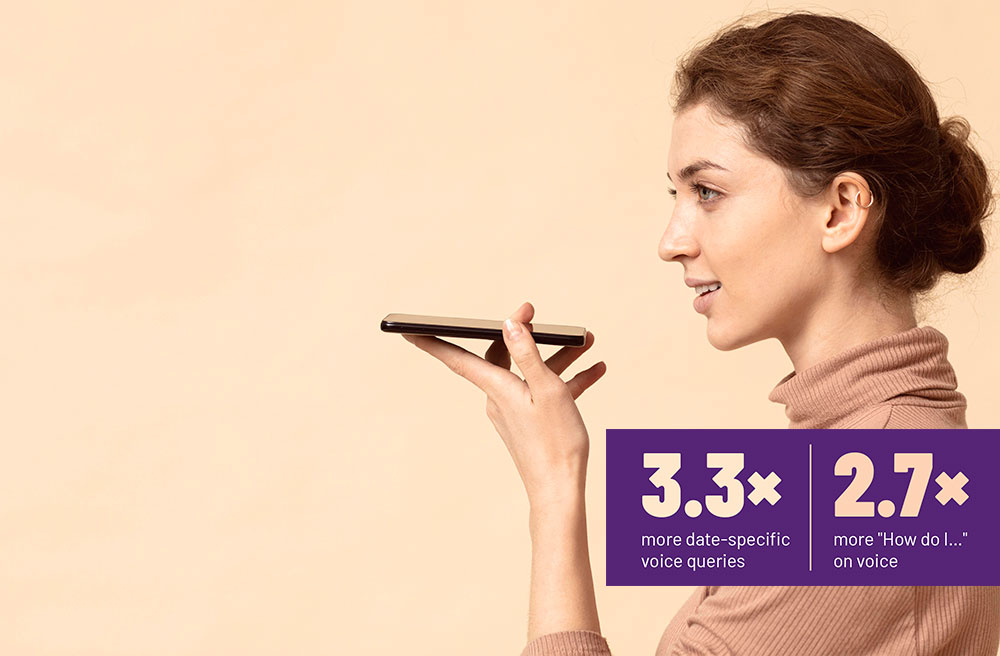
Dates: Voice queries with specific dates happen 3.3 times more often. It’s just easier to say “next Friday to Sunday” than fiddle with a calendar.
Guidance: “How do I…” questions are 2.7 times higher on voice. People ask Myra for advice in their own languages how to get a Saudi visa in Hindi, what documents you need for Japan in Kannada, that sort of thing.
Hyper-local: About 25% of voice searches are super specific to a place. Instead of a stiff address, people ask for hotels “near the beach” or “walking distance from the Golden Temple.”
Finding our voice
The best thing about this shift? Voice is opening travel to everyone. Text search has always been kind of English-only, but voice is a whole mix of languages.
For a lot of travelers, typing in English is a real hurdle. But speaking in their own language, of course, is easy. The numbers are wild:
Malayalam: People use voice over text 46 to 1.
Tamil: 36 to 1.
Telugu: 32 to 1.
Even folks who switch back and forth between Hindi and English — Hinglish, that mix — get way more expressive with voice. They’ll say, “Manali mein 3 nights ke liye hotel chahiye with mountain view and breakfast.” (Need a hotel in Manali with mountain view and breakfast for 3 nights). That’s nuance you just can’t squeeze out of a tiny text box.
As Rajesh Magow, co-founder and group CEO of MakeMyTrip puts it, “Voice is starting to give a new set of users, those who are most comfortable in their own language, a more natural way to search and plan travel. For someone in Kochi or Coimbatore who thinks in Malayalam or Tamil, being able to simply speak their requirements, rather than type them in English, changes the experience meaningfully.”
From luxury villas to smaller cities
This isn’t just about making things easier. Voice actually helps with complex stuff, too. Premium travellers use it to fire off super-detailed requests — no more messing with five filters. They just say, “5-star villa in North Goa with private pool, 6 bedrooms, for 8 adults under ₹50,000 per night.”
But honestly, the biggest change is happening in India’s heartland. Over 45% of Myra’s queries come from Tier-2 and smaller cities. By supporting Bengali, Marathi, Kannada, and a bunch of other languages, MakeMyTrip is turning travel planning into something everyone can do — not just the tech-savvy crowd, but anyone with a voice.