Global Cool »
Lyrics In The Age Of Noise
From 3 Idiots to Panchayat, Swanand Kirkire discusses the struggle for depth and the creative ‘bonus’ of writing to a tune
By Rupam Jain
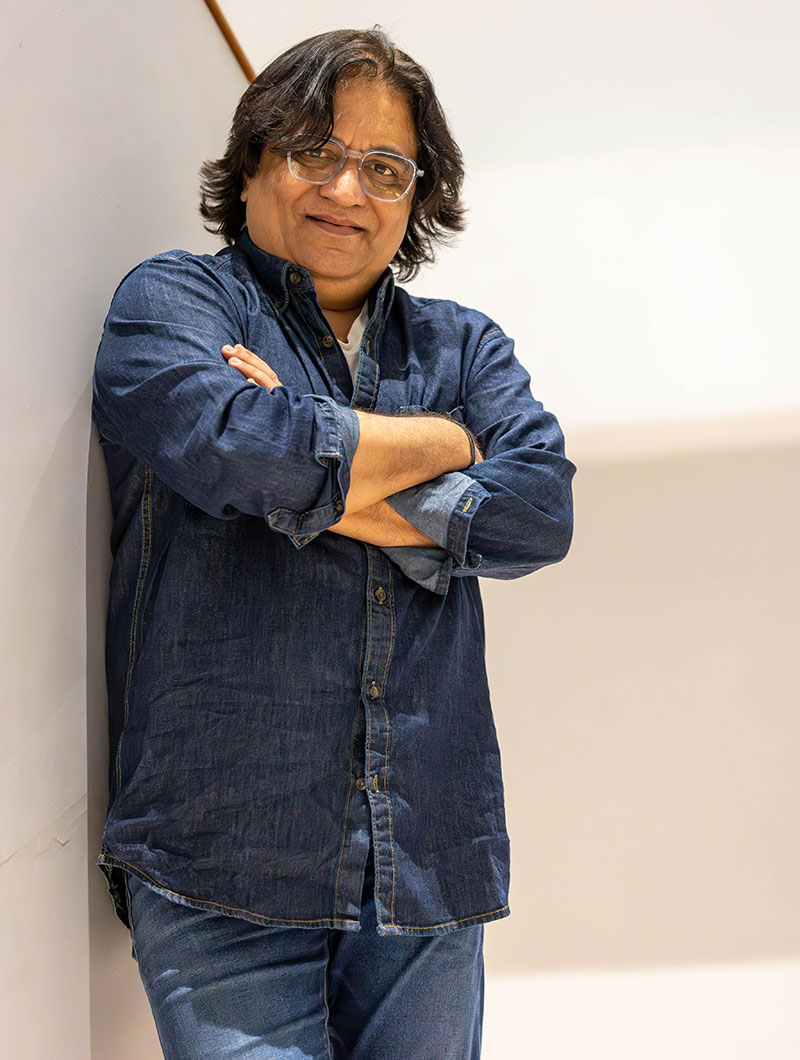
In an Indian cinematic industry where meaning is often lost in the melody, Swanand Kirkire is a rare craftsman of the written word. A polymath, who seamlessly switches between lyric writing, composing, singing and acting, Swanand doesn’t just fill meters; he creates worlds. From 3 Idiots’ soul-stirring philosophy to the harsh realities of modern life, his work connects the giant canvas of celluloid to the hushed tones of literature. This candid conversation includes a discussion about the “masculinity” of contemporary film scores, theatre’s power to change lives, and the reasons why “ordinary” people continue to act as his greatest inspiration.
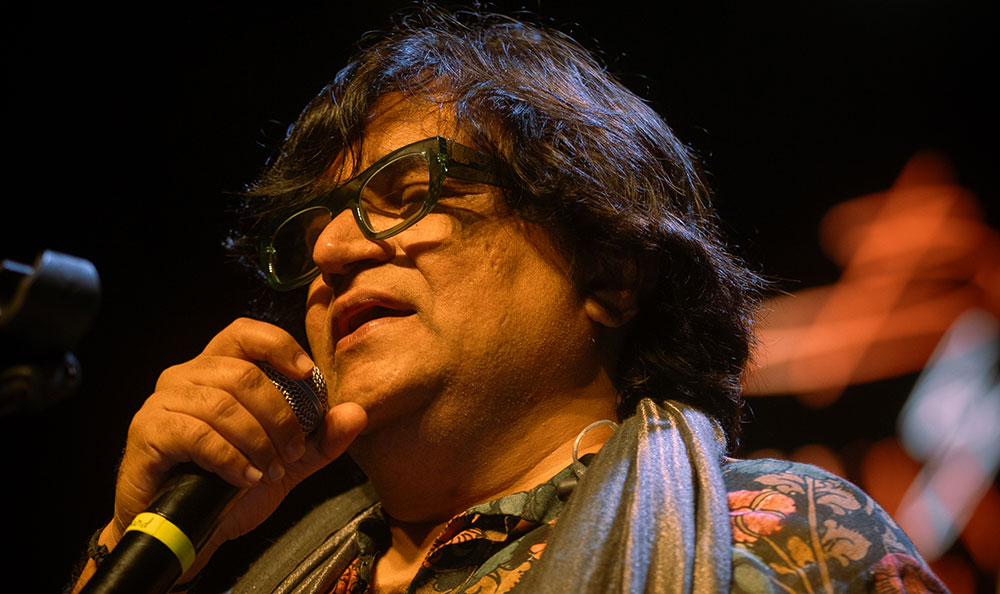
Your lyrics often feel like small stories rather than just lines meant to fit a tune. Do you see songwriting as a form of storytelling that stands somewhere between poetry and cinema?
Yes, I approach songs like that. The song should have its own story, not just meaningless rhyming. A song, just like a story, should have a beginning, middle and end. That’s what storytelling and sound writing for cinema is all about.
Many of your songs carry a quiet philosophical quality — simple words that linger long after the music ends. Do these thoughts come from lived experiences, or from observing the world around you?
Lyricists today are struggling with language and depth, because of the nature of the films which are being made currently. There should be a situation on which you are writing. If you are writing a song only for an action sequence, what are you going to write really? It’s music heavy, music dominated, you know. Language and depth come with sensitivity — when you touch human emotions, human realities, human shortcomings. But the situations in films these days are very… what can I say… they are very masculine. And I don’t think there is a lot of scope for language and depth there, although people are trying to do good work.
You have often spoken about the influence of literature and theatre on your work. How have those early artistic exposures shaped the emotional texture of your writing?
Theatre and literature have indeed shaped my writing and my overall existence, because that’s where I drive from. You live a life and then you observe a life through reading literature. The life you cannot live, you live through literature. The things you cannot see in a lifetime, you see through literature. Thus, there are many lifetimes you see through literature. Theatre is also like that… you live many lives on stage. And that’s how the overall understanding of life comes to you. So yes, literature and theatre are my biggest inspirations.
In films like 3 Idiots, your lyrics captured the anxieties and dreams of an entire generation. When you write for cinema, do you think about the larger cultural moment your words might become part of?
I don’t necessarily think about a larger culture and movement, but I stay true to the times we are living in. When you are writing for a film, the language, the understanding, the philosophy, everything derives from the time itself. So, if you are talking about the youth, the new generation, you have to bring forth their thoughts and problems.
Your writing often celebrates ordinary people and everyday emotions. What is it about the ‘ordinary’ that fascinates you as a storyteller?
Ordinary people are the most interesting subject to write a song for. There are songs written about/for heroes. But ordinary people can also be your heroes with their anxieties, their aspirations, their reality, their shortcomings, their rise, their fall.
“The song should have its own story — not just meaningless rhyming. A song, just like a story, should have a beginning, middle and end.”
– Swanand Kirkire
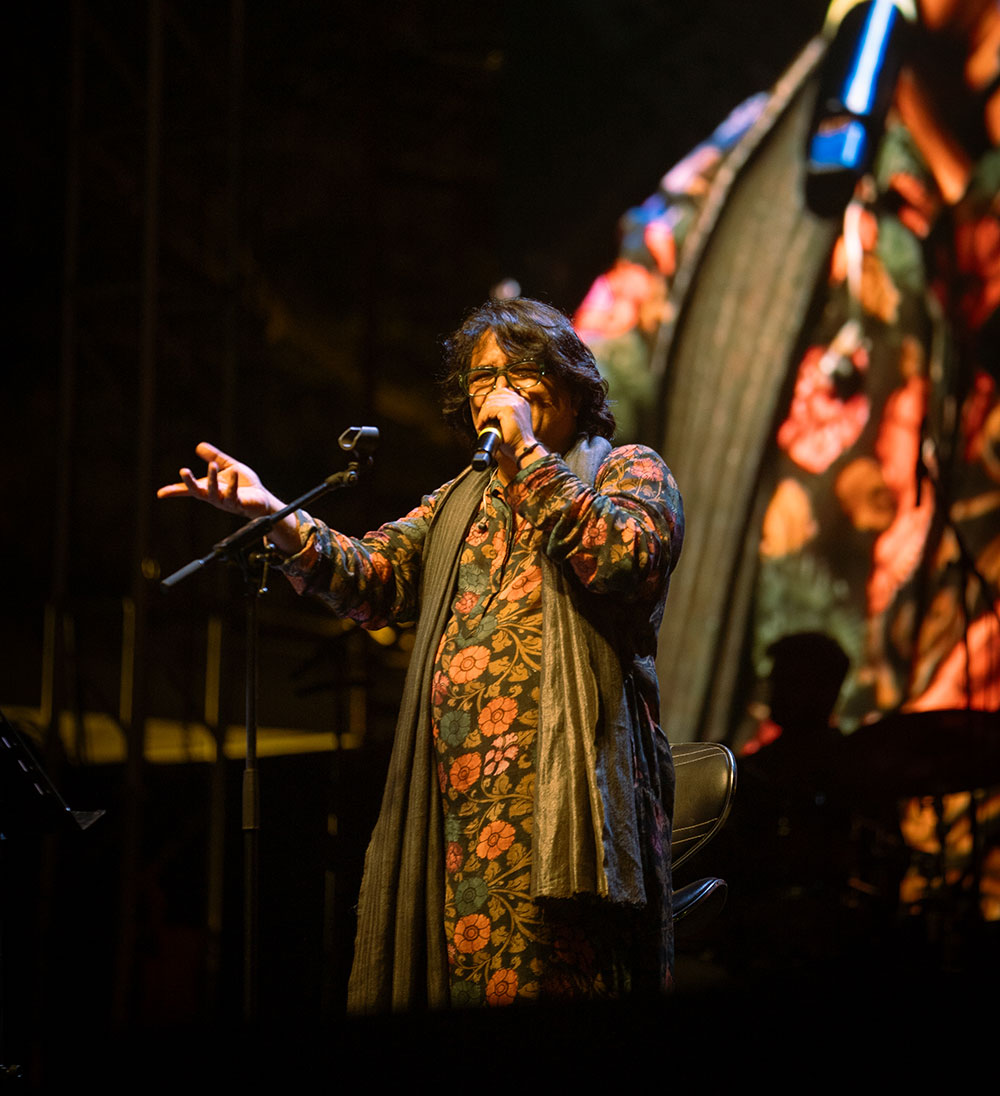
Your writing often celebrates ordinary people and everyday emotions. What is it about the ‘ordinary’ that fascinates you as a storyteller?
Ordinary people are the most interesting subject to write a song for. There are songs written about/for heroes. But ordinary people can also be your heroes with their anxieties, their aspirations, their reality, their shortcomings, their rise, their fall.
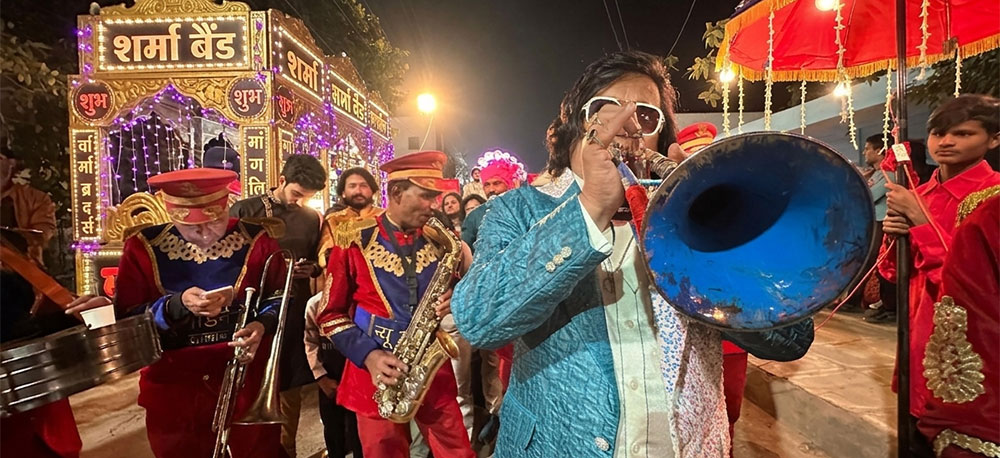
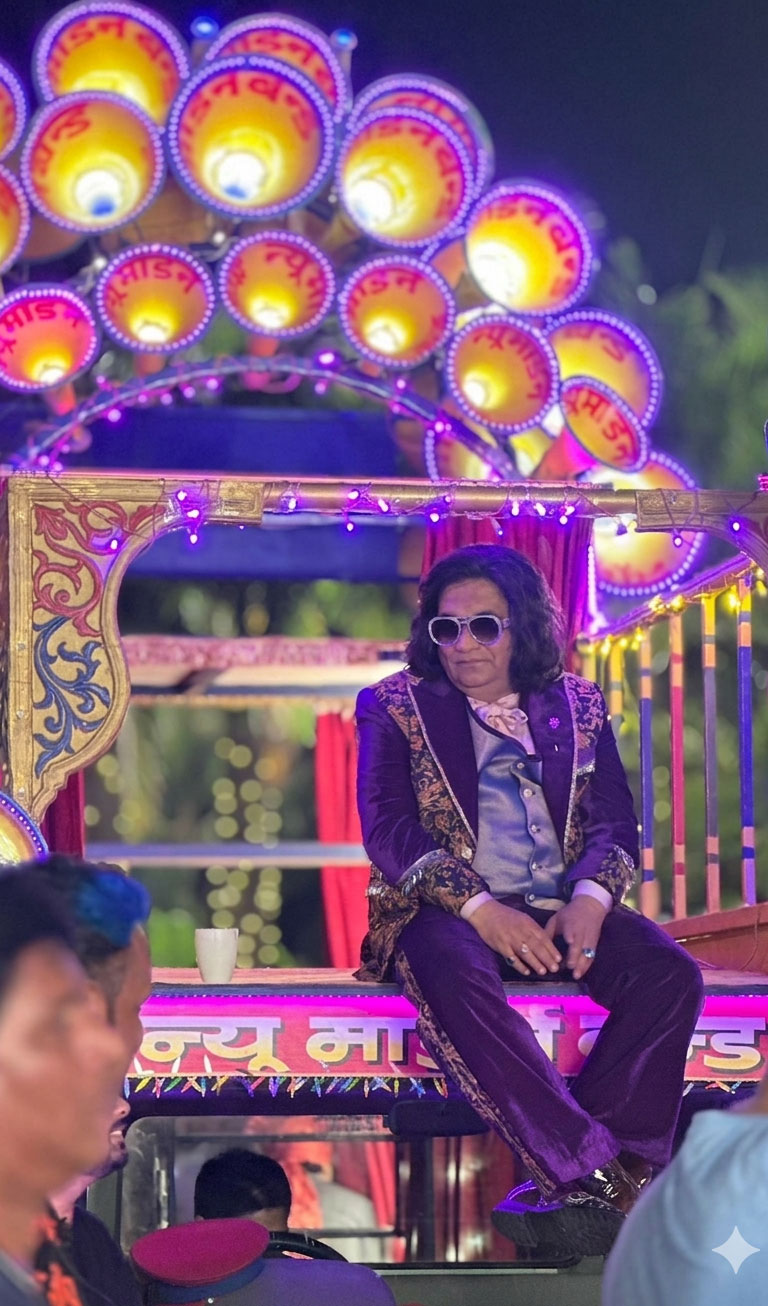
You’ve also stepped in front of the camera. Has acting changed the way you understand characters when you write lyrics for them?
I have done films like Badrinath Ke Dulhaniya, Chumbak, Three of Us, Bandwale, and Panchayat. And yes, my understanding has changed.These are two different disciplines. When you act, you understand the character in a real sense. When you write lyrics, you understand the character in some sense.
Many lyricists talk about the challenge of writing to a pre-composed tune. Do you see this as a limitation or as an interesting creative puzzle?
Writing to a composed tune is always great. Sometimes it does look like a problem. But when you practice and master the art, it gives a different colour and character to your lyrics. Every person has an inherent meter. When a composer composes a tune, sometimes you are forced to break that meter. And when you do that, some other words, phrases and similes begin to flow, making the song more interesting. So, it’s not a ‘challenge’. In fact, it’s a bonus.
In an age of short attention spans and quick consumption of music, do you worry about the fading culture of listening closely to lyrics?
Yes, that worries me. Lyrics get the least attention. People don’t listen to the lyrics the way they should. And the lyricists are always kept behind. That’s a problem.
If you had the freedom to write a song without any cinematic context — no character, no situation, no duration limit — what kind of song would you want to write today?
I have released five or six of my singles. They experiment with every form. There is a song called Shor Gul, another called Meri Jaan, Chand Awara, which is a longish poem I composed into music. So, yes, when there is complete freedom, the story becomes even stronger as you write the song. I love to do that.
Key Highlights
5+
Solo singles released, each experimenting with a different musical form
20+
Years crafting lyrics that bridge literature, theatre and Hindi cinema
∞
Lives lived — through literature, theatre and the endless world of words
RAPID FIRE