Hello People! »
Eternal Sunshine Of A Painted Mind
Artist Fawad Tamkanat revisits home through shifting light, softened memories and patient mark-making, creating works where time, place and emotion gently converge
By Rupam Jain
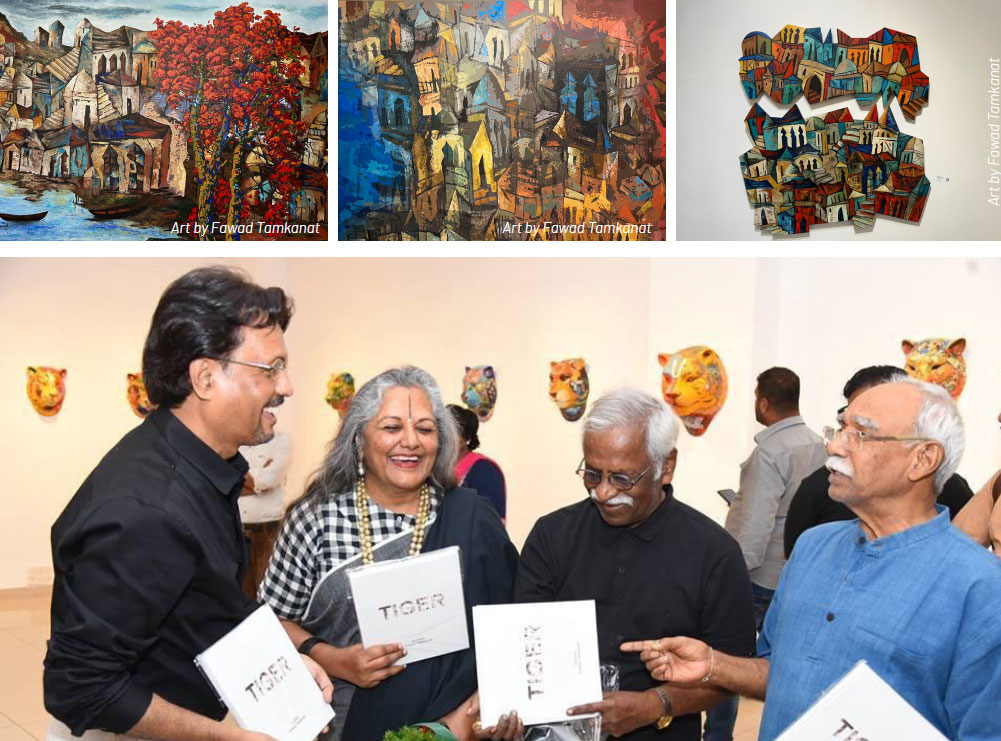
After two decades away, Fawad Tamkanat has made a comeback with In the Shadow of Russet Roofs, where his practice intermittently moves between the tactile nostalgia of Hyderabad and nordic minimalism. There is no rush in his practice, it develops through patience, memory, and multilayered narration. In this conversation, Fawad speaks about distance and reshaping belonging; slowness as a key factor in his work; and his canvases as emotional geographies where architecture, light, and human experience intersect in an original, yet evocative way.
Excerpts:
In the Shadow of Russet Roofs traces your journey from Hyderabad to Scandinavia — how have these two geographies reshaped your visual language over time?
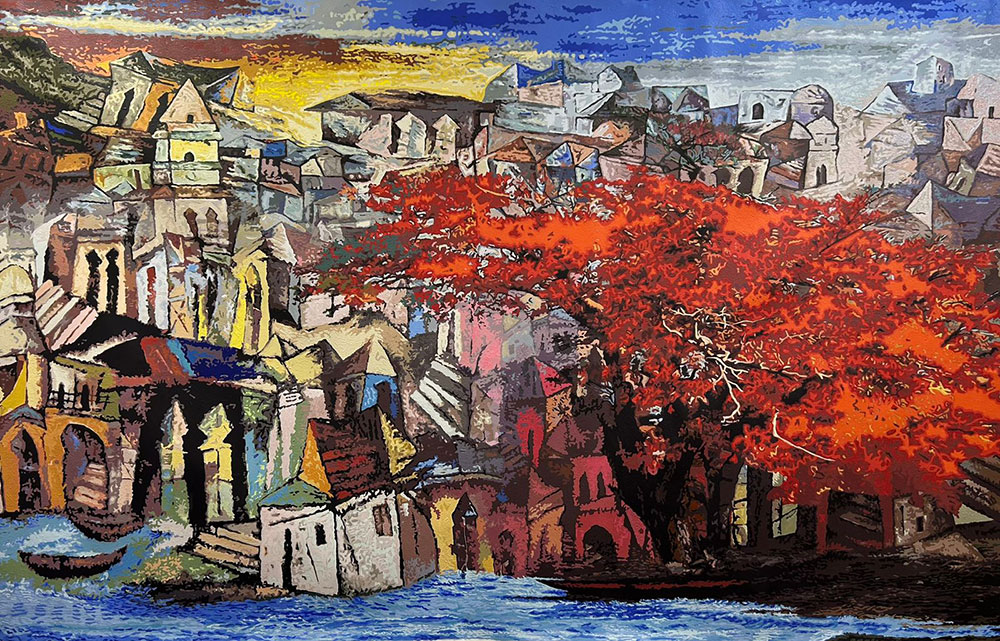
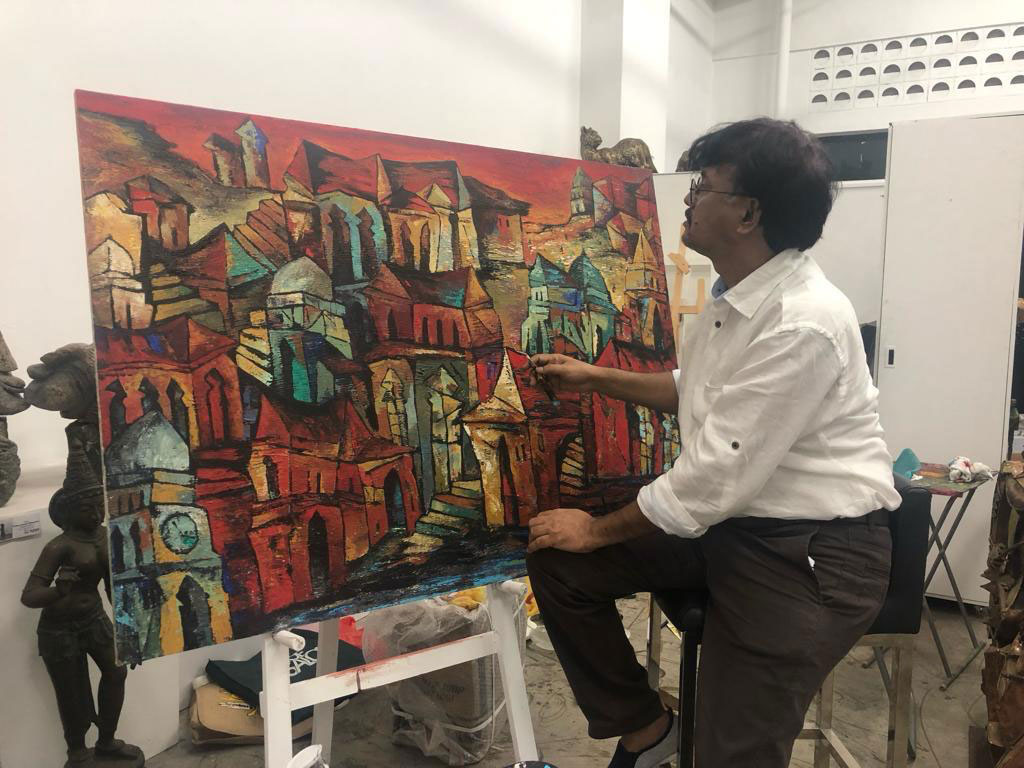
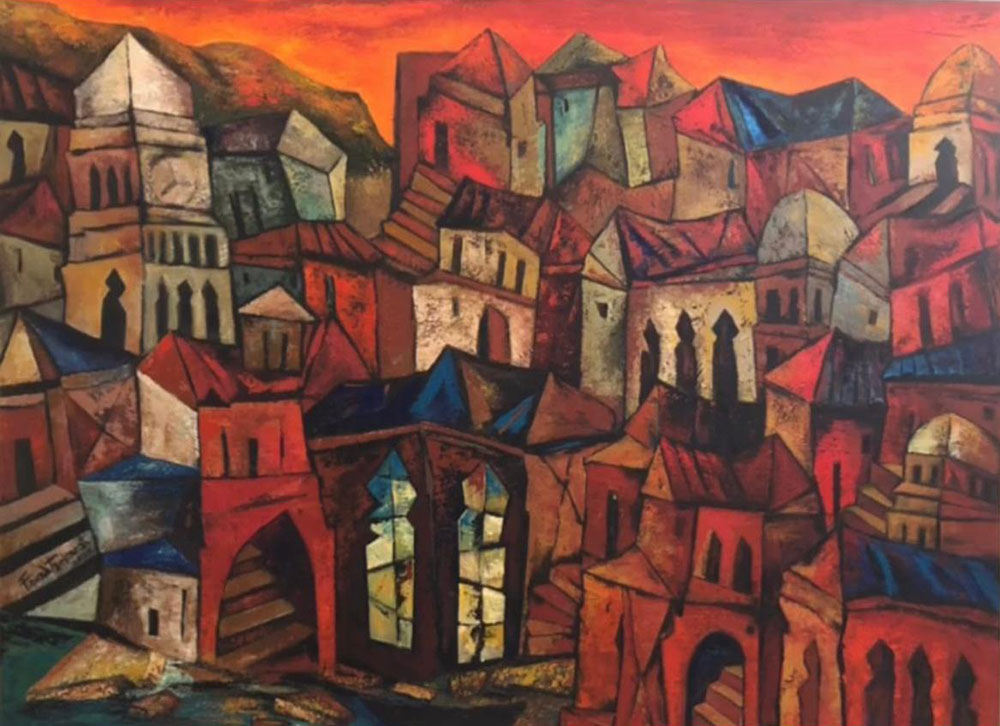
My cityscape painting captures the vibrant essence of Hyderabad, India, with its blend of ancient architecture and modern landscapes. Interestingly, Hyderabad’s cultural fusion has parallels with Scandinavian countries’ design aesthetics, which emphasize functionality and simplicity. The Nordic emphasis on light and minimalism resonates with Hyderabad’s own blend of traditional and contemporary styles.
While Scandinavian houses are known for their steep, pitched roofs designed to shed snow, Hyderabad’s old architecture showcases flat roofs and arches, reflecting its Persian and Mughal influences. The city’s historic buildings, like the Chowmahalla Palace, Purani Haveli, feature intricate tile work and domes, echoing Isfahan’s style in Iran. Hyderabad’s unique blend of cultures contrasts with Scandinavia’s minimalist, functional designs, yet both share a connection to their surroundings — Hyderabad with the Musi River, and Nordic countries with their fjords and forests.
You mention painting just one canvas a month — how does this slow, deliberate process influence the emotional density of each work?
It’s like pouring my soul into each piece! Painting one or two canvases a month lets me dive deep into the emotions and stories I want to tell. Each brushstroke carries a bit of me, and the slow process lets those emotions breathe and settle. It’s like crafting a love letter to whoever’s gonna see it. The emotional density is high because I’m not rushing; I’m letting the piece unfold like a memory. The process is not preconceived. The act of painting cannot be described in words; it’s poetry.
After decades away, how has your idea of “home” evolved, both personally and artistically?
“Home” is like a canvas that’s been layered with time and distance, the Hyderabad’s streets, creating a textured landscape in my mind. Artistically, it’s the fusion of global influences with the essence of India, waiting to unfold in my next series. Twenty years away, and every thread of experience seems to lead me back to where my story began.
Your works feel deeply layered — both physically and metaphorically. What draws you to this process of building, rather than resolving, an image?
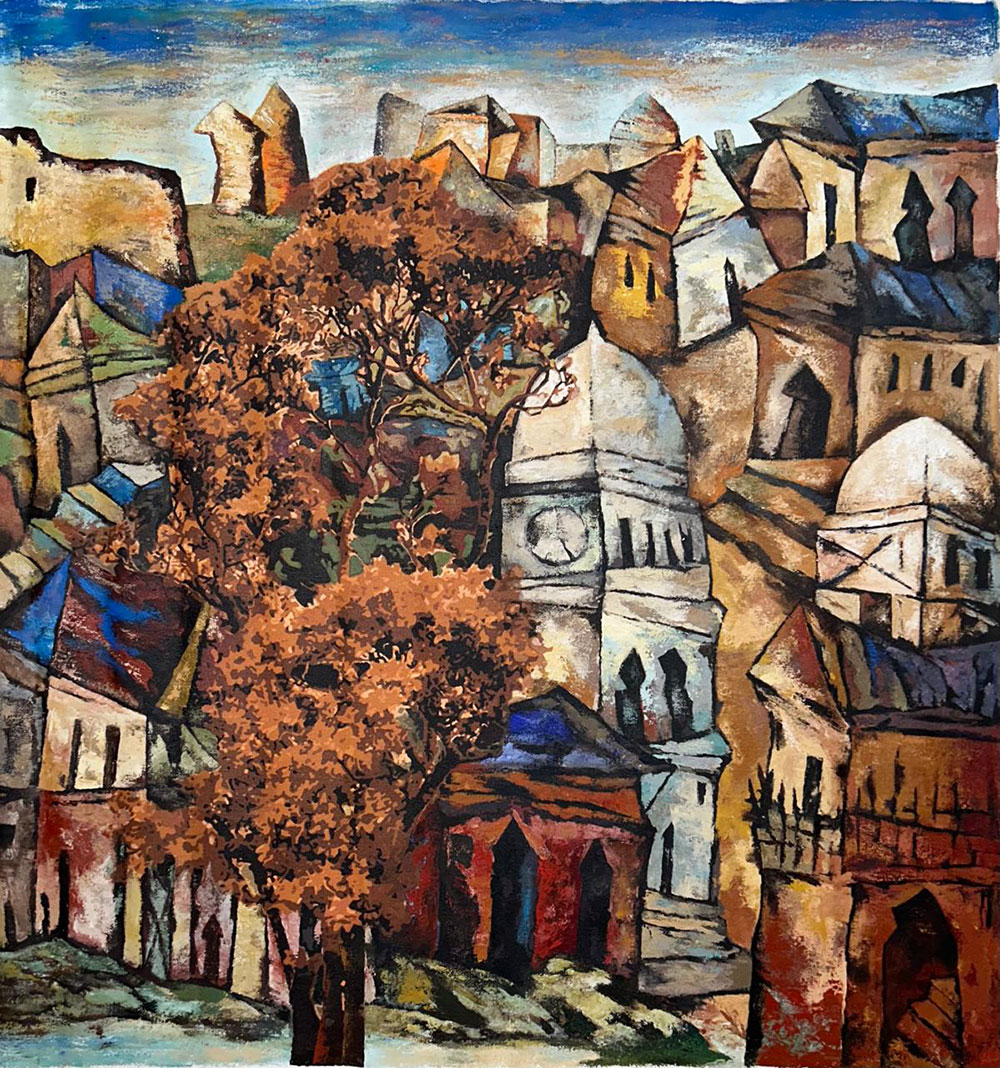
It’s about the journey not the destination. I invite the viewer in and let them uncover the story within it. Building layers, physically and metaphorically, lets me embed fragments of memories , emotions and experiences in to the canvas. It’s like creating a visual poem where each layer holds a whisper of something — a texture, a colour, a moment. I don’t want to resolve the image completely.
How do memory and distance collaborate in your practice — do they sharpen your vision or soften it?
Distance and memory are like twin brushes in my hand — they blur the edges, letting me see the essence. They sharpen what’s important, soften what’s not. It’s like looking at a landscape through mist; some things emerge clearer, others fade, but the mood stays.
What does the “russet roof” symbolize for you — architecture, nostalgia, or something more abstract and internal?
The russet roof is like a whisper of nostalgia, but it’s more — it’s the warmth of stories lived under European Middle Eastern and Indian skies. Architecture meets emotion; it’s the colour of memories settling in.
Has living in Scandinavia altered your relationship with colour, light, and space compared to your early years?
My colours were soft but now in Hyderabad and other small towns in India, the light is intense — it’s like seeing everything in high definition. Emotions are nostalgic, like looking at old photographs in a new light.
When you return to earlier visual memories, do you find yourself preserving them faithfully or reinterpreting them through time and experience?
I reinterpret them, definitely. Memories are like old photographs, faded and soft — when I bring them into my work, they’re reborn with new colours, textures, and emotions. Time and experience add layers, like varnish on an old painting.
Your work seems to carry a sense of patience and stillness. How do you resist the pressures of speed in today’s art world?
I just don’t rush it. My paintings take time, and I let them breathe. Few of my canvases are incomplete for the last five years. Clearly, speed is not my vibe. There is pressure from galleries and collectors, but I take my own time to complete the work. I never show my work to any collector if I am not happy with the result.
Looking back at decades of practice, what has remained constant in your artistic voice, and what has quietly transformed without you even realising it?
What’s constant is my love for layers — digging into the canvas, adding, and subtracting. What’s changed is maybe it’s quieter, more introspective. I didn’t notice it shifting, it just did. I believe I paint the way I live. Art is a way of life after all.
QUICK TAKES
If you had to paint a famous person, who would that be and why?
My best memory of painting a famous personality was my father. I designed my father’s poetry book cover at the age of 16 before joining art college. Also, I sketched Indira Gandhi in 1986 and sent it to her. She signed the sketch and sent it back to me with a letter. I still have those.
Your most favourite painting and why?
I do not have one favourite painting. I have a series of erotic black and white etchings and drypoint made in Denmark, from 1996 to 2000. Few works of the same series are at the National Gallery of Modern Art, New Delhi, and Kristen Kajer museum, Denmark.
One painting of yours bought by a celeb and what makes this artwork special?
Many celebrities have bought my work including Aamir Khan and Amitabh Bachchan. Aamir bought my Cityscape 20 years back, and Amitabh bought the painting titled Performer. I am not sure what was special about the work; they liked these at a major national exhibition and bought them.
What was your first artwork?
I used to paint a face, of a girl, very often when I was in pre primary school.